
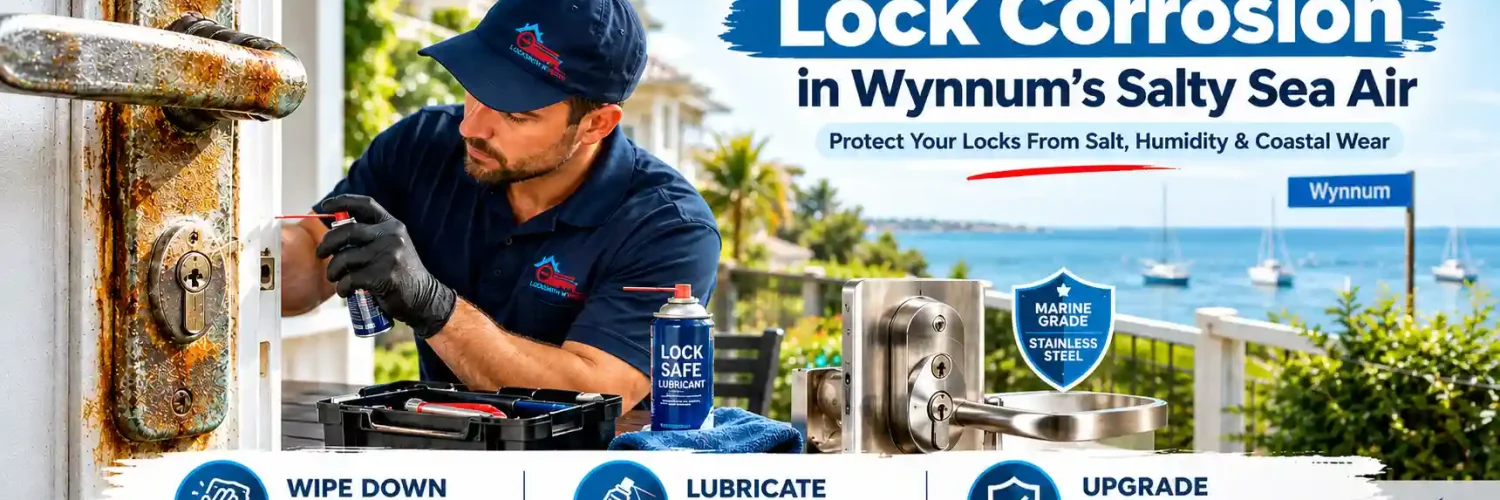
Living close to the bay in Wynnum comes with plenty of perks, but it also means your door and window locks are fighting a battle most inland suburbs never have to think about.
Wipe down exposed metal hardware regularly, apply a proper lock-safe lubricant every few months, choose corrosion-resistant materials where you can, and have locks serviced before rust sets in rather than after. That’s the short version — here’s the detail behind each step, and why Wynnum homes need this more than most.
Why Do Locks Rust in the First Place?
Rust isn’t random. It’s a genuine chemical reaction, and understanding it makes prevention far more effective.
The Science in Plain English
Metal corrodes when it reacts with oxygen and moisture, and salt dramatically speeds this process up by acting as an electrolyte that carries the reaction along faster. This is exactly why coastal suburbs see hardware fail years before the same product would in a landlocked town.
Why Wynnum Locks Are Especially Exposed
Being right on Moreton Bay means the sea breeze carries fine salt particles well beyond the immediate foreshore, settling on external door handles, window latches, and gate locks across the whole suburb, not just the homes directly facing the water.
“Salt doesn’t need a storm to do damage — a normal sea breeze on an ordinary Tuesday is doing the work, just slowly enough that nobody notices until the lock seizes.”
Other Coastal Culprits Beyond Salt
Salt gets most of the blame, but it isn’t working alone. A few other coastal factors compound the problem in ways many homeowners never consider.
Humidity and Temperature Swings
Brisbane’s humid, subtropical climate means metal surfaces rarely get the chance to stay fully dry, and repeated damp-then-dry cycles accelerate oxidation compared to a consistently dry inland climate.
UV Exposure on Plastic and Rubber Components
Many modern locks include small rubber seals or plastic housings around the mechanism, and constant sun exposure can degrade these over time, letting moisture in around parts that were originally protected from it entirely.
The Warning Signs Most People Miss
Corrosion rarely appears overnight. It builds gradually, and catching it early makes all the difference to how much it costs you down the track.
Early Indicators Worth Checking For
- A faint orange or green discolouration around the keyhole or handle base
- A key that’s begun turning with slightly more resistance than usual
- A gritty or scratchy feeling when the key first enters the lock
- Visible pitting or a rough texture on external metal surfaces
Expert tip: Run your finger lightly along external lock hardware every few months — texture changes are often noticeable by touch before they’re obvious to the eye.
How to Prevent Lock Corrosion Before It Starts
This is where a small amount of regular effort saves you from a much bigger problem down the track.
Wipe Down Exposed Hardware Regularly
A simple wipe with a dry or lightly damp cloth after a salty, windy day removes the fine particles before they have a chance to settle in and start reacting with the metal.
Use a Proper Lock-Safe Lubricant, Not Just Any Oil
How to stop locks from rusting often comes down to using the right product, applied the right way. A dedicated lock lubricant designed for corrosion resistance coats the internal mechanism without attracting dust and grime, unlike general-purpose household oils.
Avoid Common Household Substitutes
- WD-40 and similar products aren’t true lubricants — they evaporate and leave behind a sticky residue that attracts dirt
- Cooking oils or petroleum jelly can gum up fine internal components over time
- Graphite powder can work in a pinch but isn’t ideal for long-term coastal use
Expert tip: Apply lubricant sparingly and work the key in and out a few times afterward — this distributes it evenly through the internal pins rather than leaving it pooled at the entry point.
Don’t Forget Gates, Sheds, and Outdoor Locks
Front door locks tend to get all the attention, but outdoor hardware is arguably more exposed to the elements and often the first to show real damage.
Why Outdoor Hardware Corrodes Fastest
Side gates, garden shed padlocks, and pool fence latches sit fully exposed to sea breeze with no eave or awning offering any real protection, which means they typically need attention more frequently than a sheltered front door ever will.
Choosing Corrosion-Resistant Hardware From the Start
Prevention isn’t only about maintenance — the materials you choose in the first place matter enormously in a suburb like Wynnum.
Stainless Steel vs Brass Locks
Marine-grade stainless steel hardware is specifically engineered to resist salt exposure, and while it’s a genuinely worthwhile upgrade for coastal home security locks, even brass performs reasonably well if it’s cared for consistently. Standard zinc alloy fittings, by comparison, are poorly suited to coastal conditions and tend to show visible corrosion within a year or two near the bay.
What to Ask For When Upgrading
- Confirm the grade of stainless steel, since not all stainless hardware is truly marine-rated
- Ask whether the finish includes any additional protective coating
- Check that internal components, not just the visible exterior, use corrosion-resistant materials
- Request a quick demonstration of how the lock operates before installation is finalised
Building a Simple Maintenance Routine
How often to service locks is a question worth answering properly rather than guessing, especially this close to the water.
A Practical Seasonal Schedule
- Every three months: wipe down and visually inspect all external hardware
- Twice a year: apply fresh lock-safe lubricant to all external locks
- Once a year: have a professional check internal mechanisms for early wear
Our experience shows homes that follow even a loose version of this routine rarely face a full rusty lock replacement — it’s almost always the homes with no routine at all that end up needing one.
When It’s Time to Replace, Not Just Maintain
Sometimes corrosion has already progressed too far for cleaning and lubrication to fully solve the problem.
Signs You’re Past the Maintenance Stage
- Visible pitting that’s deep enough to feel with a fingernail
- A key that consistently sticks despite regular lubrication
- Internal grinding or crunching sounds when turning the key
- Rust that’s spread beyond the surface to visibly weaken the mechanism
At this point, rusty lock replacement genuinely becomes the more sensible option, since a heavily corroded lock is both a security risk and, eventually, a safety issue if it fails to open when needed.
Bringing It All Together for Wynnum Homes
Salt air corrosion isn’t something you can fully avoid living this close to Moreton Bay, but it’s very much something you can manage with the right habits and the right materials. A little regular attention, a wipe-down here, a proper lubricant there, and choosing genuinely corrosion-resistant hardware for any upgrade, keeps your locks working reliably for years longer than they otherwise would.
Conclusion
Locks near the bay in Wynnum work harder than locks almost anywhere else in Brisbane, simply because of what’s carried on the sea breeze every single day. Understanding why that happens, watching for the early warning signs, and building a simple maintenance habit around it means your hardware stays reliable long after a neglected lock elsewhere would have already failed.