
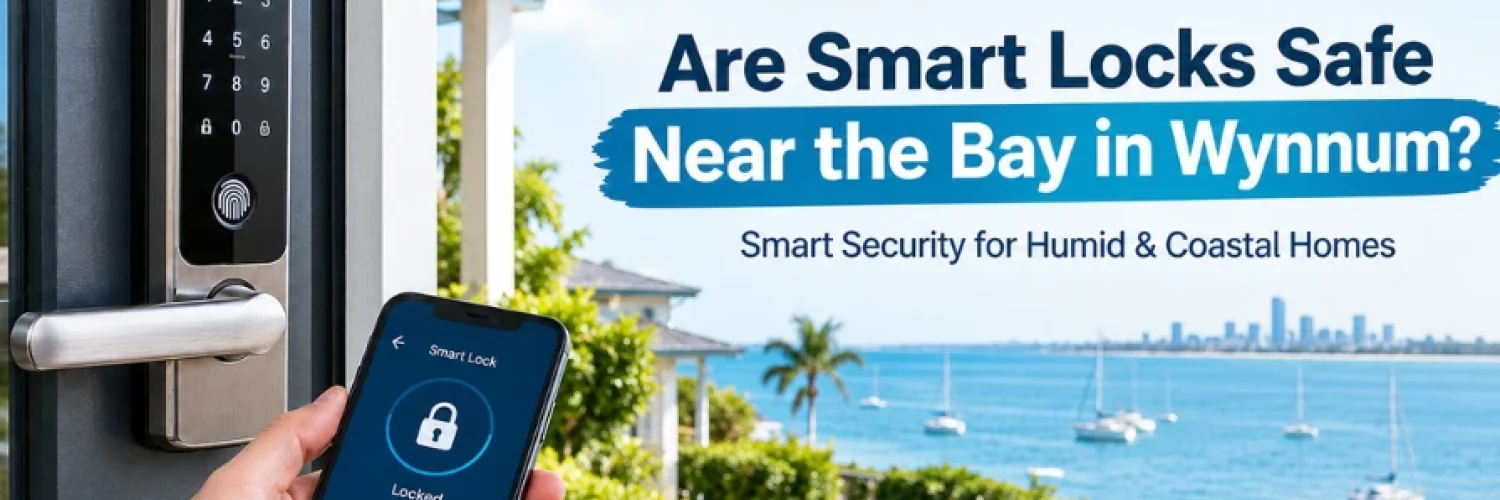
Smart locks have become a genuinely popular upgrade across Wynnum, but living this close to Moreton Bay raises a fair question most product pages never really answer properly.
Yes, smart locks are safe for Wynnum homes, provided you choose a model built for coastal, humid conditions, keep firmware updated, and pair it with sensible physical security rather than relying on the technology alone. Let’s unpack exactly what “safe” means here, since it covers more than just hacking risk.
What “Safe” Actually Means for a Smart Lock
People tend to think of smart lock safety as purely a cybersecurity question, but that’s only one part of the picture.
Three Different Kinds of Safety
- Digital safety — resistance to hacking, unauthorised access, or app vulnerabilities
- Physical safety — how well the lock resists forced or manipulated entry compared to a standard deadbolt
- Environmental reliability — whether the device actually keeps working in Wynnum’s humidity and salt air
A smart lock that’s digitally secure but fails in the weather isn’t actually safe in practice — it’s just secure in theory.
Are Smart Locks Safe From Hacking?
Smart lock hacking risk is the concern most people jump to first, and it’s worth addressing honestly rather than dismissing it.
The Real Risk Level
Reputable smart locks use encrypted communication between the lock and your phone, and genuine remote hacking incidents are far rarer than headlines suggest. The more common real-world risk is far less dramatic — a weak home Wi-Fi password or an outdated app rather than some sophisticated break-in attempt.
How to Minimise the Risk
- Choose a brand with a proven track record and regular firmware updates
- Use a strong, unique password for the lock’s companion app
- Enable two-factor authentication if the manufacturer offers it
- Keep your home Wi-Fi network properly secured, not just the lock itself
“Most smart lock vulnerabilities aren’t clever hacks — they’re simply weak passwords nobody ever got around to changing.”
Common Myths About Smart Lock Safety
A lot of hesitation around smart locks comes from myths that don’t hold up once you look at how the technology actually works.
Myth: Anyone With a Laptop Can Break In
In reality, exploiting a properly encrypted smart lock requires far more sophistication and physical proximity than popular imagination suggests, and reputable brands actively patch vulnerabilities as they’re discovered.
Myth: Power Outages Lock You Out Permanently
Almost all smart locks retain battery backup and a physical key override, meaning a power outage affects your Wi-Fi router far more than it affects your ability to get through your own front door.
Myth: Smart Locks Are Less Secure Than Traditional Locks
Since most smart locks are built around the same deadbolt mechanisms as traditional hardware, the physical security is often equal, with the added digital layer sitting on top rather than replacing it.
How Smart Locks Compare on Physical Security
Digital safety aside, a smart lock still needs to hold up physically, the same way any traditional lock does, especially when Wynnum’s mix of older and newer homes means door quality itself varies a fair bit.
What to Look For
Many smart locks are actually smart deadbolts underneath the technology, meaning the bolt mechanism itself offers comparable physical resistance to a standard deadbolt. The electronics control access, but the bolt still has to do the heavy lifting when it comes to resisting force.
Expert tip: Always check a smart lock’s physical bolt rating separately from its “smart” features — a flashy app means nothing if the bolt itself is flimsy.
Environmental Reliability Near the Bay
This is where Wynnum’s location genuinely changes the conversation, and it’s the part most general smart lock advice skips entirely.
Why Humidity and Salt Air Matter for Electronics
Unlike a purely mechanical lock, a smart lock has circuit boards, sensors, and battery contacts, all of which are more sensitive to moisture and salt exposure than a simple metal mechanism.
What to Check Before Buying
- Waterproof smart lock ratings — look for an IP65 rating or higher for genuine weather resistance
- Whether the manufacturer specifically mentions coastal or humid-climate suitability
- Reviews from other Australian coastal homeowners, not just general online reviews
Best smart lock for humid climate conditions typically means a model with sealed battery compartments and corrosion-resistant external housing, not just a standard indoor-rated device fitted to an external door.
Choosing the Right Smart Lock for a Bayside Home
Not every smart lock on the market is built with coastal conditions in mind, so narrowing the field properly matters more here than it would inland.
What to Prioritise When Comparing Models
- A genuine weatherproof rating rather than marketing language alone, since terms like “water-resistant” and “waterproof” mean very different things
- Compatibility with your existing door hardware, to avoid costly modifications
- A companion app with a solid update history, which usually signals ongoing manufacturer support
- Local availability of support and replacement parts, rather than an overseas-only brand with no Australian presence
Smart Lock Battery Life in Coastal Conditions
Smart lock battery life deserves its own honest conversation, since a dead battery at the wrong moment genuinely matters for a front door lock.
What Affects Battery Performance Near the Bay
- Higher humidity can slightly reduce battery efficiency over time
- Frequent temperature swings between hot days and cooler nights add extra strain
- Salt-laden air can, in rare cases, affect battery contact points if the housing isn’t properly sealed
Practical Steps to Stay Ahead of It
- Choose a lock with low-battery notifications sent directly to your phone
- Keep spare batteries on hand rather than waiting until the warning appears
- Check that your smart lock retains a physical key override as a genuine backup
Expert tip: Test your smart lock’s manual override monthly, not just when you install it — a backup you’ve never actually tried isn’t a reliable backup at all.
Getting Installation Right From the Start
Even the best smart lock underperforms if it isn’t installed and configured properly on day one.
What Proper Installation Should Include
- A professional check of door alignment, since a poorly fitted door strains any lock, smart or otherwise
- Correct sealing around the external housing to keep moisture out from the very first day
- A full walkthrough of app setup, including guest access and activity log features
Are Smart Locks Worth It for a Bayside Wynnum Home?
Are smart locks worth it near the water comes down to weighing genuine convenience against a slightly higher maintenance commitment than an inland home might need.
The Case For
- Keyless entry system Australia-wide convenience, especially useful for busy households
- Remote access for tradespeople, guests, or family members
- Activity logs showing exactly when the door was used
The Case for Caution
- Requires choosing genuinely weather-rated hardware, not a generic model
- Needs slightly more proactive battery and firmware maintenance
- Best paired with a quality physical bolt rather than relied on alone entirely
Making Smart Locks Work Reliably in Wynnum
A few practical habits go a long way toward making sure your smart lock performs well long-term in this climate.
Simple Maintenance Habits
- Wipe down external housing periodically, the same way you would any exposed hardware
- Keep firmware and the companion app updated as soon as updates are released
- Position the lock away from direct, prolonged sun and rain exposure where the door design allows it
Our experience shows the smart locks that perform best long-term in Wynnum are the ones chosen specifically for coastal conditions from day one, rather than a standard model installed and hoped for the best.
Conclusion
Smart locks are genuinely safe for Wynnum homes, both digitally and physically, as long as you choose hardware built for humid, salty coastal conditions and maintain sensible digital habits like strong passwords and regular updates. The bay doesn’t make smart locks unsafe — it just means the “which smart lock” decision matters a little more here than it would further inland, and getting that one decision right early on saves plenty of hassle down the track.